

The Course

How to become a
sovereign individual.

A ten-module course on personal sovereignty in the digital age — privacy, cryptocurrency, second citizenships, offshore banking, operational security, and long-term wealth preservation.

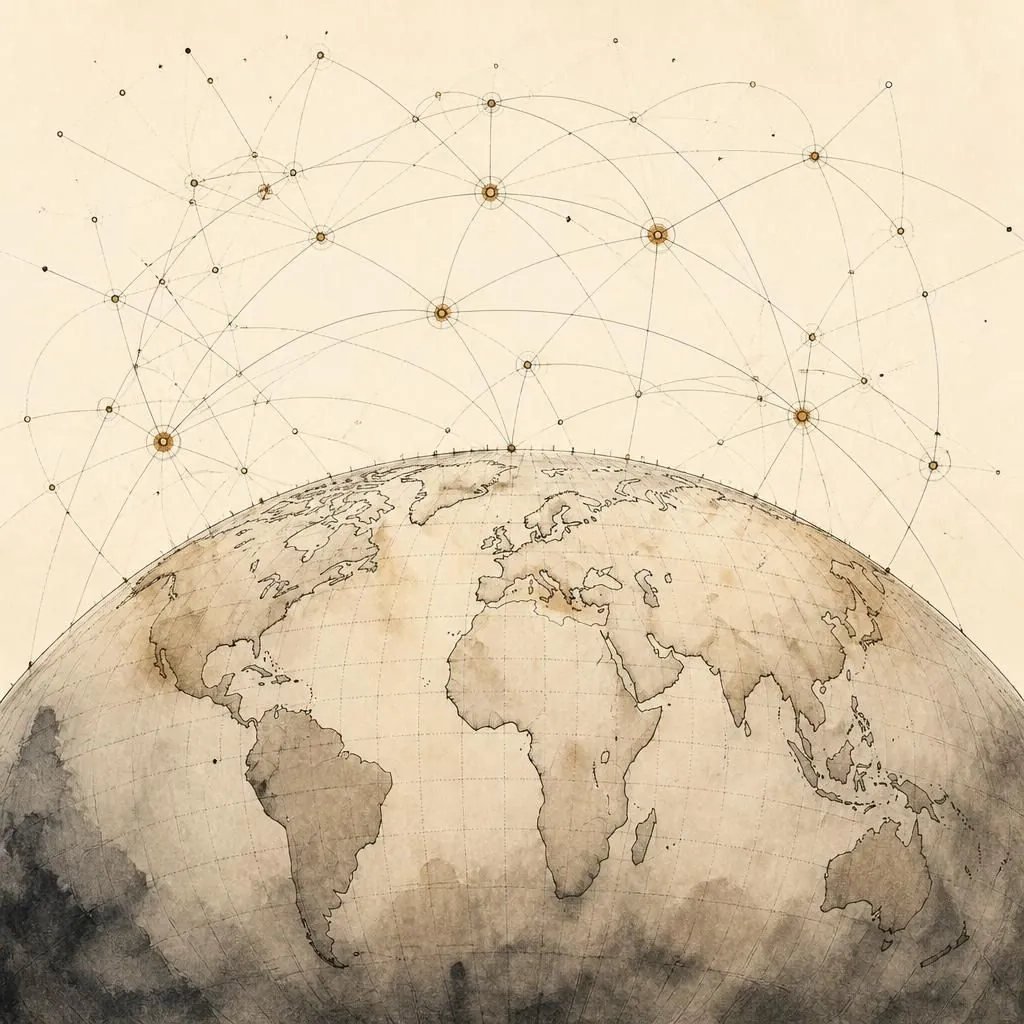
Editorial illustration — compass, globe, and column

Introduction

Before the modules.

Defining Sovereignty in the Digital Age

Personal sovereignty is the practical capacity to decide where you live, how you hold your wealth, who you transact with, and what data about you is generated in the first place. In the digital age, none of that is guaranteed by default.

Why It Matters for High-Net-Worth Individuals

The more you have, the more your options depend on choices made by third parties — governments, banks, platforms. Sovereignty is the process of reducing that dependence to something you can live with.

How This Course Is Structured

Ten modules, built to be read in order or referenced individually. Foundations first, then privacy, crypto, mobility, and financial infrastructure — closing with community, health, and future-proofing.

Who This Course Is For

Crypto holders, founders, investors, and long-time global citizens who want a structured way to think about jurisdictional freedom — without the noise and without the sales pitch.

Module 01

Understanding Sovereignty

Sovereignty represents the highest level of personal autonomy in the modern world — control over your identity, finances, movement, data, and decision-making without undue interference from governments, corporations, or institutions.

Editorial illustration for Understanding Sovereignty

Historical Evolution

The concept of individual sovereignty has deep roots. In ancient societies, individuals often enjoyed greater personal freedom within tribal structures. The Enlightenment, through thinkers like John Locke, established the idea of natural rights — life, liberty, and property — that governments could not legitimately violate.

The rise of nation-states in the 18th and 19th centuries centralized power and reduced individual autonomy through taxation, conscription, and regulation. The Sovereign Individual (1997) by James Dale Davidson and Lord William Rees-Mogg argued that the information age would reverse this trend — that cryptography and digital money would empower individuals to operate beyond the reach of traditional states. That prediction has largely materialized through Bitcoin, privacy coins, and global digital infrastructure.

Core Principles of Digital Sovereignty

  • Self-ownership

    Ultimate authority over your body, mind, and personal data — including medical decisions, digital identity, and how your information is used.

  • Autonomy in decision-making

    Reject coercive systems where possible; prioritize voluntary interactions. This guides choices around taxation, residency, and financial systems.

  • Privacy as foundation

    Privacy is not secrecy for its own sake — it is the ability to operate without constant observation, which is what creates real freedom.

  • Decentralization

    Power should be distributed rather than concentrated. Blockchain, peer-to-peer networks, and decentralized finance embody this principle.

  • Resilience and antifragility

    Sovereign systems should not only survive stress but improve because of it — through redundancy in finances, locations, and identities.

The Threats to Sovereignty in 2026

Modern threats are more sophisticated than ever. Governments continue to expand surveillance capabilities using AI and data-collection programs. Corporations monetize personal data at scale, often shaping behavior through algorithms. Fiat currencies lose purchasing power through inflation, while Central Bank Digital Currencies introduce the risk of programmable and fully trackable money.

Social credit systems and predictive policing, already active in some regions, represent emerging models of control that can spread. For high-net-worth individuals and crypto users these threats are particularly relevant, because wealth and digital activity create larger attack surfaces.

Key takeaway

Understanding sovereignty requires recognizing both its historical roots and the very real modern threats that make proactive strategies necessary — not optional.

Module 02

Mindset & Philosophy of Sovereignty

Technology and legal structures are useless without the correct mindset. Sovereignty is first and foremost a mental framework.

Editorial illustration for Mindset & Philosophy of Sovereignty

Cultivating a Sovereign Mindset

Most people are conditioned from childhood to trust authority and depend on institutions. A sovereign mindset systematically questions those assumptions — not from paranoia, but from clear thinking about dependencies and risks.

Practical habits that support this mindset include regular journaling to track dependencies, studying antifragility (Nassim Taleb), and practicing stoicism — focusing only on what you can control. Daily meditation and mental rehearsal of different scenarios strengthen psychological resilience.

Philosophical Foundations

The Cypherpunk Manifesto established that privacy is a fundamental requirement for open societies and that cryptography is a tool for social and political change. The Sovereign Individual provided the macroeconomic and historical framework for understanding how technology shifts power to individuals.

Libertarian philosophy, particularly the Non-Aggression Principle, provides an ethical foundation: interactions should be voluntary, and force should only be used in self-defense. Eastern traditions such as Taoism offer valuable perspectives on detachment from unnecessary dependencies — flowing with changing circumstances rather than resisting them rigidly.

Goal-Setting and Overcoming Barriers

Begin with a thorough Personal Freedom Audit. List every major dependency — bank accounts, residency status, tax obligations, data exposure — and rate them by risk level. Then set specific, measurable goals against each one.

Common psychological barriers include fear of authority, imposter syndrome, and excessive risk aversion. These are overcome through gradual exposure — starting with small sovereignty actions (a VPN, a hardware wallet, researching second passports) and building confidence over time.

Key takeaway

The strongest sovereignty strategies fail without a mindset that supports independence, critical thinking, and long-term discipline.

Module 03

Digital Privacy Fundamentals

Privacy is the invisible infrastructure that protects every other aspect of sovereignty.

Editorial illustration for Digital Privacy Fundamentals

Assessing Your Current Footprint

Most individuals significantly underestimate their data exposure. Common leaks occur through social media, smartphone apps, email accounts, browser tracking, and metadata in photos and documents. A proper audit involves reviewing account activity, checking data-broker sites, and testing what is publicly available about you.

Building a Privacy-First Lifestyle

Start with secure communication. Signal offers strong encryption for messaging; Session provides decentralized alternatives. For browsing, combine a reputable no-logs VPN with Tor for sensitive activity. I2P can be useful for certain peer-to-peer use cases.

Data minimization is equally important. Use aliases and burner accounts where appropriate, avoid unnecessary sharing, and regularly delete old information. Device hardening — GrapheneOS on Android, careful configuration on iOS — significantly reduces tracking.

Advanced Techniques

Metadata protection is often overlooked but critical. Stripping EXIF data from images and using tools that add noise can prevent location and device fingerprinting. Identity compartmentalization is a powerful technique: maintain separate digital profiles for different areas of life — personal, business, crypto — to limit correlation.

Layering tools (VPN + Tor + compartmentalization) creates much stronger protection than any single method.

Key takeaway

Effective privacy requires both good tools and disciplined habits. The goal is to make yourself a difficult, low-value target.

Module 04

Cryptocurrency as the Backbone

Cryptocurrency is currently the most powerful tool available for achieving financial sovereignty.

Editorial illustration for Cryptocurrency as the Backbone

Why Cryptocurrency Matters

Traditional banking is centralized, censorable, and subject to inflation and political control. Cryptocurrency — Bitcoin as a store of value, privacy-focused coins for transactions — lets individuals hold and transfer wealth without permission from intermediaries.

Decentralized Finance expands options further, enabling lending, borrowing, and trading without traditional banks. Privacy coins such as Monero use ring signatures and stealth addresses to make transactions difficult to trace.

Building and Securing Sovereign Wallets

Hardware wallets remain the gold standard for significant holdings. Coldcard (air-gapped, Bitcoin-focused), Trezor, and Ledger are the mainstream choices. Multisignature setups such as 2-of-3 add important security layers by requiring multiple keys to authorize a transaction.

Diversification across cryptocurrencies and blockchains reduces single points of failure. Bitcoin serves well as long-term store of value; other assets can be used for utility and income.

Earning, Spending, and Off-Ramps

Earning in crypto is increasingly viable through freelancing platforms, DAOs, and Web3 projects. Spending is done through crypto debit cards or peer-to-peer methods.

Crypto off-ramps are especially important for larger amounts — structured methods to convert cryptocurrency into traditional currency or assets while maintaining privacy and compliance. Effective strategies often involve privacy coins for the final on-chain step, peer-to-peer trading, or routing through multiple jurisdictions and entities. Poorly planned off-ramps are one of the most common ways sovereign individuals lose privacy.

Key takeaway

Cryptocurrency gives you financial independence — but you must master both secure custody and responsible exit strategies to fully benefit.

Module 05

Global Mobility & Citizenship by Investment

The core module. Flag Theory in practice, every credible CBI program in 2026, and how HNWIs actually structure jurisdictional arbitrage.

Editorial illustration for Global Mobility & Citizenship by Investment

Flag Theory and the Perpetual Traveler

Flag Theory spreads your life across multiple jurisdictions to reduce risk and increase freedom. The four main flags are citizenship, residency, banking, and asset location. Separating them prevents any single country from controlling your critical infrastructure.

The Perpetual Traveler (PT) lifestyle takes this further — maintaining no permanent tax residency in high-tax jurisdictions while still enjoying a high quality of life.

Citizenship by Investment in 2026

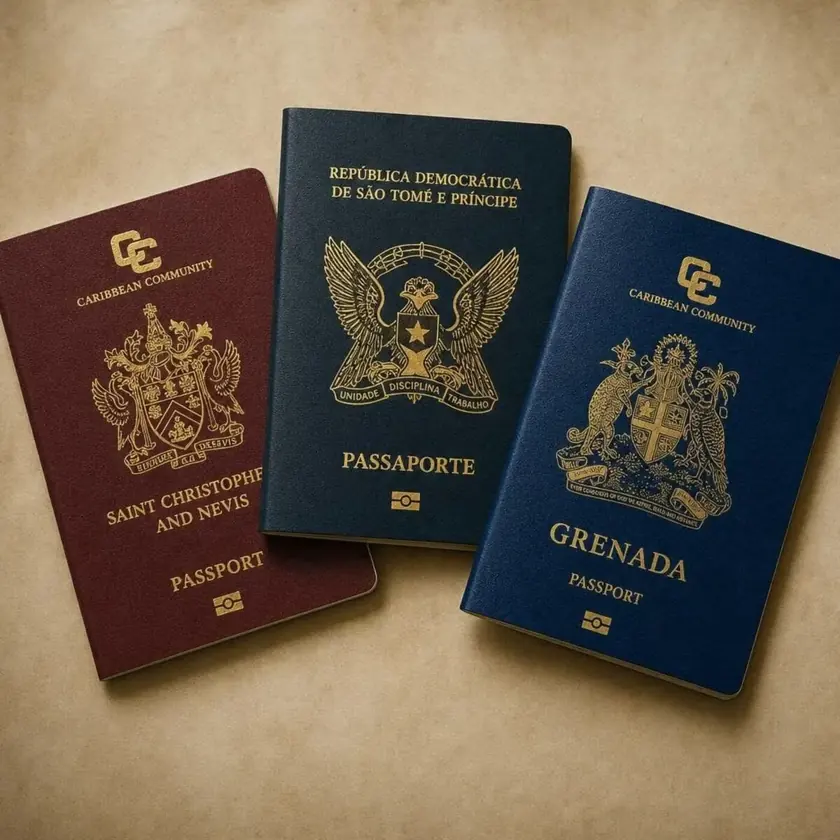
Citizenship by Investment remains one of the fastest routes to a second passport. The Caribbean programs continue to lead in value and accessibility:

  • St. Kitts & Nevis

    Fast processing and a strong passport with excellent visa-free access.

  • Antigua & Barbuda

    Competitive pricing — especially for families — with good travel freedom.

  • Dominica

    Frequently the most affordable option with solid passport strength.

  • St. Lucia and Grenada

    Strong alternatives with good visa-free travel; Grenada uniquely opens the door to the US E-2 investor visa.

Other Notable and Emerging Programs

Turkey (real estate route), Egypt, and Jordan continue to attract applicants. Lower-cost or emerging options exist in Nauru and São Tomé and Príncipe. Argentina is expected to launch a citizenship by investment program in the second half of 2026.

When evaluating programs, weigh total cost (including due diligence and government fees), processing time, passport strength, tax implications, and long-term stability of the program itself.

Residency and Strategic Mobility

Digital nomad visas and residency-by-investment programs are lower-commitment entry points. Thailand, Mexico, Georgia, Portugal, and the UAE all offer competitive options — many with pathways to permanent residency or citizenship over time.

Practical Implementation

The most effective setups usually combine a strong second citizenship (often Caribbean) with residency in a favorable jurisdiction for banking or living (UAE or Singapore). That combination provides maximum flexibility for travel, banking, and tax optimization.

Key takeaway

Global mobility and Citizenship by Investment are no longer luxuries — they are strategic tools for protecting wealth, privacy, and freedom in an increasingly unstable world.

Explore CBI programs

Module 06

Operational Security (OpSec)

Operational Security protects everything else you build.

Editorial illustration for Operational Security (OpSec)

Core Principles

Effective OpSec begins with threat modeling: identify who might target you (governments, hackers, competitors), what they want (assets, data, location), and where you are vulnerable. Apply Defense in Depth — multiple protective layers, not a single solution.

Digital OpSec

Use secure operating systems such as Qubes OS for compartmentalization or Tails for sensitive sessions. Implement strong password management with hardware authentication keys. Be extremely cautious with phishing and social engineering — still the most common attack vectors.

Physical and Travel Security

Protect devices with Faraday bags when necessary. Use tamper-evident seals and maintain strict border-crossing protocols. Many experienced sovereign individuals travel with clean devices and keep sensitive data offline or heavily encrypted.

Key takeaway

OpSec is the discipline that ensures your privacy, crypto holdings, and mobility strategies actually remain effective.

Module 07

Financial Infrastructure & Offshore Strategies

Cryptocurrency alone is often not enough for sophisticated wealth management. Traditional financial infrastructure remains relevant when properly structured.

Editorial illustration for Financial Infrastructure & Offshore Strategies

Offshore Banking in 2026

Offshore banking provides privacy, asset protection, and access to stable banking systems. Jurisdictions that remain relatively friendly to crypto holders and HNWIs include the UAE (particularly Dubai), Singapore, Switzerland, the Cayman Islands, and the Bahamas.

Opening and maintaining offshore accounts requires careful structuring and understanding of international reporting requirements. The goal is legitimate privacy and protection — not concealment.

Asset Protection Structures

Trusts, private foundations, and offshore companies offer additional layers of protection. These structures can separate legal ownership from beneficial ownership and provide estate-planning benefits. Decentralized Autonomous Organizations are emerging as interesting alternatives for certain asset classes.

Integrating Crypto and Traditional Systems

The most robust setups combine cryptocurrency holdings with properly structured offshore banking relationships — enabling efficient on-ramps and off-ramps while maintaining privacy and flexibility.

Key takeaway

Strong financial infrastructure requires both modern cryptocurrency tools and traditional offshore structures — working together in a coordinated way.

Module 08

Financial Independence & Wealth Preservation

Financial sovereignty is not only about generating wealth — it is about protecting and transferring it effectively.

Editorial illustration for Financial Independence & Wealth Preservation

Building Sustainable Income

Passive income in crypto can come from staking, lending protocols, running nodes, or holding dividend-paying tokens. These should be evaluated on risk-adjusted returns, not headline yields.

Risk Management

Diversification across blockchains, asset classes, and geographies reduces concentration risk. Hedging and disciplined position sizing help navigate market volatility. Insurance alternatives — decentralized coverage protocols — can provide additional protection for smart-contract risk.

Long-Term Wealth Planning

Inheritance planning for digital assets requires special attention. Multisignature setups and smart-contract-based wills can automate transfer according to your wishes. Inflation hedging through real assets and gold-backed tokens helps preserve purchasing power over decades.

Key takeaway

True financial sovereignty requires both generating income and building structures that protect wealth across generations and market cycles.

Module 09

Sovereign Networks & Communities

Sovereignty does not mean isolation. Strong networks significantly increase both opportunities and security.

Editorial illustration for Sovereign Networks & Communities

The Value of Trusted Networks

Well-vetted networks provide access to information, business opportunities, mutual support during challenges, and collective knowledge no individual can build alone.

Online and Offline Strategies

Decentralized platforms such as Nostr offer censorship-resistant communication. High-quality DAOs can provide governance and resource-sharing. In the physical world, freedom-oriented hubs — Bali, Lisbon, Dubai, Chiang Mai — host communities of like-minded individuals.

Selected conferences and events allow for high-signal networking when done strategically.

Building and Maintaining Relationships

Trust should be built gradually. Start with low-stakes interactions and increase involvement only after consistent alignment of values and behavior is demonstrated.

Key takeaway

The strongest sovereign individuals are usually well-connected within trusted networks — while maintaining their independence.

Module 10

Health, Wellness & Future-Proofing

Long-term sovereignty requires physical and mental health — and adaptability to future change.

Editorial illustration for Health, Wellness & Future-Proofing

Sovereign Health Management

Taking responsibility for your health includes biohacking practices, personalized nutrition, regular monitoring through wearables, and exploring alternative healthcare when conventional systems fall short. Medical tourism in high-quality, lower-cost destinations can be part of a sovereign health strategy.

Sustainable and Independent Living

Reducing dependencies on centralized systems through solar power, water collection, local food production, and resource independence increases resilience. This does not require going fully off-grid — but it does require meaningful redundancy.

Preparing for the Future

Emerging technologies such as AI and quantum computing will create both opportunities and risks. Continuous learning, redundant systems, and geographic diversification help prepare for regulatory change, economic shifts, and technological disruption.

Key takeaway

Sovereignty is a long-term project. Physical health, mental resilience, and adaptability determine whether you can maintain freedom over decades.

Conclusion

Sovereignty is a practice.

Becoming a sovereign individual in the digital age means integrating multiple disciplines: mindset, privacy, cryptocurrency, global mobility, operational security, financial infrastructure, networks, and personal resilience.

These strategies work as a complete system. Citizenship by Investment and global mobility provide geographic freedom. Cryptocurrency and offshore structures provide financial freedom. Privacy and OpSec protect both. Mindset and networks sustain the entire structure over time.

Start where you are. Conduct honest audits of your current situation, then implement improvements systematically. Sovereignty is built through consistent action — not sudden transformation. The individuals who will thrive in the coming years are those who treat personal sovereignty as a serious, lifelong practice.

Newsletter

The SovereignIndividual
Briefing.

Bi-weekly signal on CBI updates, banking developments, and private crypto spending — delivered quietly to your inbox.

No spam. Unsubscribe any time.