

The Briefing

Global mobility and citizenship by investment

A nine-module briefing on personal sovereignty in the digital age - privacy, cryptocurrency, second citizenships, offshore banking, operational security, and long-term wealth preservation.

9 Modules~42 min totalSelf-paced
Editorial illustration - compass, globe, and column

Introduction

Before the modules.

Defining Sovereignty in the Digital Age

Personal sovereignty is the practical capacity to decide where you live, how you hold your wealth, who you transact with, and what data about you is generated in the first place. In the digital age, none of that is guaranteed by default.

Why It Matters for High-Net-Worth Individuals

The more you have, the more your options depend on choices made by third parties - governments, banks, platforms. Sovereignty is the process of reducing that dependence to something you can live with.

How This Briefing Is Structured

Nine modules, built to be read in order or referenced individually. Foundations first, then privacy, crypto, mobility, and financial infrastructure - closing with sovereign networks and communities.

Who This Briefing Is For

Crypto holders, founders, investors, and long-time global citizens who want a structured way to think about jurisdictional freedom - without the noise and without the sales pitch.

AI tools were used for research, outlines, first-pass drafts, and editing. I rewrote the larger parts and stand behind the published text. Treat it as a briefing, not personal advice.

Module 01

6 min read

Understanding Sovereignty

Personal autonomy is, in my view, the real word for sovereignty.

It comes down to this: can you actually decide where you live, how you hold and move your money, who you deal with, what data you give away and who keeps it, and even how your own thinking gets shaped in a world full of governments, corporations, platforms and algorithms pulling at you.

To be a ‘Sovereign Individual’ does not mean that you are following some utopian ideal. Either you possess meaningful alternatives / setups across the mentioned critical domains of life, or you do not; the vast majority of people today, in the Western world in particular, are living in developed jurisdictions, and are therefore far away from being their own Sovereign.

They have one passport, one tax authority, one dominant set of financial rails, i.e. bank accounts in OECD countries that, due to the CRS Agreement, communicate their financial information across the globe and one set of identity systems.

But this is the year 2026 - this model of living will not be feasible for many for much longer. This is exactly why you ended up here - to become a Sovereign Individual!

Editorial illustration for Understanding Sovereignty

Historical Evolution of the Concept

Before we get into the practical side, a quick look back at how this idea developed, because it helps to know it is not new. In pre-modern, tribal societies power was local and personal, simply because distances were huge and technology could not reach far. A single ruler could only control so much. People had more day-to-day freedom inside their own group, even if custom and scarcity still boxed them in.

Then philosophers like John Locke came along and argued that every person has natural rights, life, liberty, property, that exist before any state does. No government, in his view, gets to just erase them. That idea pushed his contemporaries to ask a hard question: what would a constitution look like that actually limits the power of a sovereign?

Then the modern nation-state showed up in the 18ᵗʰ and 19ᵗʰ century and rolled most of that back, at least in practice. Centralized taxation, conscription, national ID papers, compulsory schooling, growing regulation, all of it turned the individual into a piece of the state machine. By the 20ᵗʰ century, a nation-state was basically a container that your whole life sat inside.

At the end of the 20ᵗʰ century, in 1997 to be precise, James Dale Davidson and Lord William Rees-Mogg published 'The Sovereign Individual'. Their argument was that the information age, cryptography, digital networks, digital money, would reverse two centuries of centralized control.

Cryptography, they said, would let wealth and communication slip out of the reach of any single government. That must have sounded like science fiction in 1997. Today we have Bitcoin and Monero, encrypted messengers, remote work, offshore companies and citizenship by investment programs, and all of that adds up to a real exit option for a growing number of people.

The Five (and Emerging Sixth) Domains of Control

In my experience it comes down to five areas you have to work on:

Self-Ownership

Full authority over your own body, mind and medical decisions is the foundation everything else rests on. That includes the right to decide what medical information, including biometric data, gets collected about you, and who gets to collect it.

Financial Autonomy

The ability to hold, move and spend your assets without asking permission from a bank, a payment processor or a monetary authority every time. Offshore corporations and banking solutions, plus self-custodied assets such as Monero (XMR), give you exactly that today.

Freedom of Movement

The ability to choose where you live, work and travel, without depending on one passport or one set of visa rules. A second citizenship or a well-placed residency turns your capital into mobility rights that last.

Data & Information Control

Keeping the permanent, linkable records that others could compile about your whereabouts, associations, finances, communications and beliefs to a minimum. This is the piece that protects all the others.

Decision-Making Independence

Last but not least, you should be able to actually choose between competing legal, monetary, technological and social systems, instead of being locked into whatever monopoly provider you were born under, meaning a nation state and its passport and ID system.

These five domains feed each other. Strong financial autonomy without mobility options does not get you far. Mobility without data discipline just moves your surveillance risk to a new country. Self-ownership without a way to enforce it stays theoretical. And clear thinking without the other four just means you understand the trap you are in, without being able to leave it.

The Paradox of Digital Sovereignty

Here is the awkward part. The same tools that give you more freedom, strong encryption, blockchains, global internet, remote work, also give everyone else better ways to sort, rank, predict and nudge you. Authentication apps, identity databases, behavior scoring and AI do not just expand what you can do; they also make the net around you tighter.

In practice that means you are always balancing the upside of a new tool against the downside of being tracked, scored and authenticated everywhere. Most things that can set you free can also be turned against you. Right now there are still gaps, messy places where different systems do not talk to each other well, and those gaps give you real room to move. But they are closing. Use them while they last and build something that lasts before they do.

Individual Sovereignty versus State and Institutional Narratives

One distinction is worth keeping straight. When governments and regulators talk about “digital sovereignty”, the European Union uses this phrase a lot, they usually mean the state's ability to control infrastructure, data flows and new technology. That is the exact fight we are watching around AI right now.

That is not what I mean by personal sovereignty. I am talking about whether you, as an individual, still have real exit options and decision rights while states are busy building their own digital walls. The two ideas get mixed up all the time, and it creates real confusion.

A country that gets more tech-autonomous might also get better at controlling the people inside it. So whenever a new law or system shows up, ask one simple question: does this give me more room to move, or less?

Measurement and Continuous Audit

Sovereignty is practical, not a slogan, and I check mine the same way I check my finances, with a simple recurring self-audit across the domains above:

  • How many independent legal identities and residencies do I actually control?
  • What percentage of my liquid net worth sits in structures that no single government or institution can freeze?
  • How easily can I change my physical location for an extended period of time?
  • How much permanent data about my movements, associations and finances exists in systems I do not control?
  • How deliberately do I curate the information and algorithmic influences that shape my own thinking?

The answers change over time. The discipline of asking the questions does not.

Why the Project SovereignIndividual.io Matters Now

The world is shifting faster than before. Growing surveillance infrastructure, automatic exchange of financial information through FATCA and CRS, expanding ownership registers, capital controls with tighter AML rules and AI-driven behavioral systems, this is simply the reality now.

At the same time we have gained real counter-tools: cryptographically secured money, strong encryption and privacy practices, competitive citizenship programs, financial structures spread across multiple jurisdictions. None of this was accessible in this form at any earlier point in history.

Sovereignty used to be a privilege for the very rich. I do not think that is true anymore. Anyone with their affairs somewhat in order can make optionality the main organising principle of their life. The work starts with actually understanding what being sovereign means, then finding the solutions that fit your own situation, then keeping an eye on new laws and regulations as they come.

Key takeaway

Sovereignty means real options across identity, capital, movement, data and thinking, and if you never check on it, you do not actually have it.


Module 02

5 min read

Mindset & Philosophy of Sovereignty

Sovereignty starts in your head, not in a toolkit. It does not matter what technology, legal structures or second passports are available to you, all of it is useless without the right mindset.

Tools make a capable person more capable. They do not create that person out of nothing, and I have watched enough people learn that the expensive way.

If your mind still treats the current system as the only possible reality, or if you let algorithms do your thinking for you, it does not matter how many sovereignty artifacts you collect. You are not actually exercising agency. Without the right mindset the whole external stack turns into decoration, a status symbol, or an expensive hobby.

Editorial illustration for Mindset & Philosophy of Sovereignty

The Core Mental Shift: From Citizen to Customer

The most important shift, in my view, is going from thinking like a citizen to thinking like a customer. A citizen is basically an administrative unit inside a territorial monopoly, paying in through taxes, compliance, identity disclosure and loyalty, mostly one way. A customer looks at competing providers of security, dispute resolution, monetary stability and infrastructure. If the deal in one country stops making sense, another one might work better. Worth remembering, since geography no longer really constrains capital, information or skilled labour the way it used to.

A few mental habits have to become automatic:

  • Agency over narrative

    Policy shifts, market moves, technological change, social pressure, these are just inputs. How you respond to them is the one thing you actually control.

  • Low time preference

    Judge decisions by what they mean in ten or twenty years, not by what feels comfortable or impressive today.

  • Antifragility

    Build your setup so that disorder and stress make it stronger, not just something it survives.

These are the filters that decide whether a second citizenship becomes real insurance or just a trophy, whether cryptocurrency becomes actual monetary infrastructure or a lottery ticket, and whether privacy becomes a daily habit or something you only perform for an audience.

Philosophical Foundations

John Locke’s theory of self-ownership, from the 17ᵗʰ century, argued that a person holds rights that exist before any state. Davidson and Rees-Mogg later translated that claim into the language of the information age, in their 1997 book ‘The Sovereign Individual’.

Their forecast was that cryptography and digital networks would let capable, motivated people exit the tax and regulatory monopolies of industrial-era nation states. You cannot control capital controls, banking policy, surveillance regimes or algorithmic ranking. What you can control is what you build in response, and how much attention and time you actually put into it.

Turning these ideas into conspiracy thinking, permanent victimhood or extreme isolation ruins the whole point. Zero-friction self-sufficiency is not possible, not for the mind and not for society. Being an individual still means dealing with other people. Meaning comes largely from relationships, and total isolation would break you. What works better, in my experience, is selective interdependence: cooperate, but only on terms that still let you walk away. The rule I hold onto is simple, never treat any relationship, platform or jurisdiction as permanent and non-negotiable.

Cognitive Sovereignty and Mental Hygiene

One layer a lot of people overlook is cognitive sovereignty, simply put, the ability to protect your own thinking from outside interference.

Large algorithmic systems, ranking engines and AI-driven content feeds now shape what you see, how you feel about it, what futures seem possible to you and even how you frame your own desires. And, ironically, influencer-driven group-think inside ‘sovereign’ or ‘freedom’ communities does the same thing from the opposite direction, it just flips the mainstream upside down while still depending on the same attention economy.

Real mental sovereignty takes consistent mental hygiene: curating your inputs, disconnecting periodically, checking your own assumptions against primary evidence, and being willing to hold an unfashionable position even inside your own circle.

Most of what people call ‘independent thinking’ is still conditioned, by culture, peers, the incentives of social media platforms, or simply wanting to belong to a group. Figuring out what you actually value usually takes repeated trial and error, not a flash of intuition.

Common Failure Modes

Most people who start down this path find their own mind working against them, and the ways it happens are pretty predictable:

  • Endless research that never turns into an irreversible step. Preparation feels comfortable, commitment does not, so people substitute one for the other.
  • Status anxiety pushes some people to keep chasing recognition inside the old system while quietly collecting ‘sovereign’ artifacts on the side.
  • Treating sovereignty like an identity or an aesthetic, instead of a set of capabilities you actually put in place.
  • The ‘expertise trap’: you rely so heavily on your own specialized knowledge that the structures you build cannot function without you personally being involved forever.
  • Mistaking isolation for strength, which builds brittle setups that fall apart under the very human need to belong somewhere.

Every one of these failure modes comes down to mindset, not tools. If your head is still wired for dependency, performance or paralysis, no external tool will fix that for you.

Practical Protocols for Agency

Before any significant decision, a career move, a location change, a financial structure, a second citizenship, ask yourself one question:

  • Does this increase or decrease my optionality across identity, capital, movement, data, decision-making and cognition?

If the answer is not a clear yes, your default should be to say no or change the plan. Do it quickly, do not get stuck overthinking it. A few more things worth keeping in mind:

  • Set hard deadlines for your research phases and stick to them, no exceptions.
  • Find the smallest irreversible step that gives you new information or capability, then take it.
  • Keep a written personal sovereignty log and actually review and update it.
  • Accept the social cost of not conforming, while keeping a handful of high-trust relationships that can survive disagreement.
  • Audit your information intake and algorithm exposure with the same seriousness you would apply to a financial or legal risk.

Do that consistently and it compounds into a coherent setup over a few years. Sovereignty starts as an internal process. Everything external follows from that.

Key takeaway

No passport, wallet or structure makes you sovereign on its own; the mindset that treats every jurisdiction as a provider you can leave does that.

Module 03

6 min read

Digital Privacy Fundamentals

Your digital footprint is the most permanent record of your life you will ever create, and I have never seen anyone fully erase one. Nearly everything you do, where you are, who you talk to, how you move money, can be stored, correlated, sold, handed to a court or fed into some model.

So I do not treat digital privacy as a lifestyle choice or a hobby. It is the thing self-ownership actually stands on, and without it everything else you build stays exposed.

Editorial illustration for Digital Privacy Fundamentals

Threat Modeling as the Starting Point

Before you touch any tool, sit down and build a clear-eyed threat model. If you have no idea who is actually watching, what they can already see, and what exposure would really cost you, then every technical choice you make afterwards is guesswork, and it might not even fix the problem you have. I have watched people spend a lot of money solving a threat they never had.

Three questions do most of the work for me:

  • Who are the realistic adversaries?

    Corporations chasing engagement, ads and training data; governments with legal power or bulk collection; criminals after your money or your identity; and the people who already know you, your own social graph, who can be pressured or hacked themselves.

  • What assets matter most?

    The link to your real identity, precise location history, your financial transaction patterns, private messages, biometric data and who you associate with.

  • What does exposure actually cost, versus what do the countermeasures cost?

    Perfect protection does not exist, and you usually do not need it. The real goal is to disclose selectively and stay resistant to casual, automated or moderately funded attempts to connect the dots.

Once you have answered those three for yourself, you can start picking actual controls. Not before.

The Layered Privacy Stack

Privacy is not one tool, it is layers stacked across several domains. Nothing you buy replaces the stack, and I say that as someone who has bought plenty of tools.

Device Layer

Your devices are the highest-value target you own. I separate mine: isolated devices or environments for anything risky, as little installed software as possible, full disk encryption, and the working assumption that any device that has left my hands at any point is compromised. I also keep biometric unlock switched off, because in many places a court can force you to unlock with your face or thumb far more easily than it can force you to hand over a passcode.

Network Layer

Metadata usually tells more than content, especially once someone has collected and analysed it over time. Who you connect to, when, and for how long rebuilds a fairly detailed picture of your life even if the actual messages stay encrypted. So the job is to leave less metadata behind, and that means understanding the difference between encrypting your traffic and actually hiding where it came from, where it is going, and who it links to. Those are two different things, and people mix them up constantly.

Communication Layer

End-to-end encryption is the bare minimum for anything sensitive, and a proper system does not keep a permanent, linkable record of who talked to whom and when. Any system that centralises metadata or keeps a recoverable key brings back exactly the risk encryption was supposed to remove, so I do not use one for anything that matters.

Identity Layer

Using your real name, or identities that are easy to link back to you, across different services is the biggest leak I see in practice. Separate the contexts, work, money, personal life, with distinct identifiers for each. Keeping things unlinked buys you more than almost any encryption tool will.

Data Minimization

This is the simplest idea in the whole module and the one most people ignore: do not create the data in the first place. Delete what you no longer need. Skip services whose entire business model runs on watching your behaviour, and pick the ones built to forget.

AI-Specific Threats and the New Attack Surface

Large language models and AI systems have widened the attack surface a lot, mostly in ways the older privacy playbooks never saw coming. On the system side you get data poisoning, adversarial examples and attempts to extract the model itself, all aimed at the integrity and confidentiality of the AI.

What matters more for you personally is that platform-owned models can build a detailed profile of you from very little, a handful of location pings, purchases, how you type, even the way you phrase a normal question. Put together, that reconstructs your health status, political views, financial stress and relationships with uncomfortable accuracy.

Chatting with an AI adds more exposure, because whatever you type can be sent to a third party, logged, stored and used to train the next version. Private information you typed once can resurface later in an output you never expected. Agent-style systems that plan and run multi-step tasks with less human oversight open up new ways for your data to move around without you noticing.

So here is what I actually do to cut down AI exposure:

  • Route sensitive queries through something you control, for example by running models locally.
  • Check what advertising and data profile the big platforms actually hold on you.
  • Put smart devices and IoT gadgets on their own separate network.
  • Harden your browser and block most tracking and fingerprinting attempts.
  • Treat every conversation with a remote model as something that could be stored forever.

Metadata, Mosaic Theory, and Everyday Leakage

When LLMs got popular, a lot of people started using them carelessly, not realising that small, boring details add up. Time zone, regional wording, mentions of local weather or events, photo EXIF data with GPS coordinates and device IDs, who you are connected to online, all of it gets pieced together into a sharp profile. That is the old ‘mosaic theory’ from intelligence work, just applied to normal digital life.

Photos shared without stripping the metadata first, location services left switched on by default, and simply not separating your different contexts, those are still the most common real mistakes I see. The tools matter, but doing this consistently matters more.

Behavioral Reality and Legal Boundaries

If your habits do not change, no tool will save you. Almost every privacy failure I have seen came from oversharing, convenient defaults, social engineering or simply not keeping the different parts of a life apart. Fatigue, the urge to explain yourself, and the social cost of looking secretive are what break people down.

Total anonymity is rarely achievable and mostly not even necessary. What you are actually after is avoiding oversharing, disclosing selectively, and staying resistant to casual or automated attempts to link your data together. Legal obligations still apply. I work within the law, I just do not hand any single authority or company a full view of my life.

Integration with the Larger Project

Digital privacy does not stand alone. It carries how you self-custody money, how you plan your mobility, how you run your operational security and how clearly you think. A second passport does not help much if every border crossing and every payment ties back to a single identity graph. Self-custodied assets are not that safe either if the devices and messages you manage them with leak metadata, and we saw exactly that in 2026, when several hardware wallet manufacturers leaked shipment data through third-party delivery services. Thinking clearly also gets harder when your information diet comes from systems built for engagement rather than accuracy.

So privacy is ongoing work: threat modelling, layered controls, data minimisation, keeping identities apart, staying AI-aware, and plain behavioural discipline. You do not buy it once and forget it. It is the work that keeps every other part of your sovereignty intact.

Key takeaway

Privacy is not something you buy once, it is a layered habit of threat modeling, data minimization and keeping your identities apart that protects everything else you build.

Module 04

5 min read

Cryptocurrency as the Backbone

Cryptocurrency turned the main prediction of ‘The Sovereign Individual’ into something you can actually use today. For the first time an ordinary person can hold and move value that is borderless, permissionless and hard for any single government to seize, if you use it right.

I do not treat it as a new asset class or something to gamble on. To me it is monetary infrastructure for people who do not want to stay a permanent customer of one monetary monopoly.

Regular fiat money is just an entry in someone else's ledger. Banks, payment processors and central banks can freeze it, reverse it, watch it, devalue it or block it whenever they decide to. Hold crypto in a self-custody wallet and it becomes a bearer asset, secured by maths and a distributed network of computers instead of a promise from an institution.

Bitcoin opened the door to that kind of property, a fixed-supply, decentralised monetary network that no government built and none can change. Monero (XMR) took it further, with cryptographic features that make a transaction genuinely untraceable. That matters, because most Bitcoin trading still happens on regulated centralised exchanges that follow strict KYC and AML rules. The moment your funds touch a KYC'd exchange account there is a trail, and it will be followed, by adversaries, by blockchain analytics firms, by law enforcement and by others.

Editorial illustration for Cryptocurrency as the Backbone

Why Cryptocurrency Enables Sovereignty

Here is what that actually buys you:

  • Capital can move at the speed of information, without asking a third party for permission.
  • Wealth can sit outside the balance sheet of any single bank or currency zone.
  • A transaction, once final, is final, it does not depend on the political stability, solvency or policy of any particular country.
  • No central authority can inflate the asset away.

None of that makes crypto risk-free, but it is the best money we currently have access to. The part that decides everything is where it sits: in your own wallet, not in a custodial account that can be frozen, hacked, made insolvent or seized.

Core Principles

Self-custody is non-negotiable

If you do not hold the private keys, you do not own the asset, you own an IOU. Custody is the line between sovereign money and a digital claim on someone else. "Not your keys, not your coins" is not a slogan to me, it is just an accurate description of how this works.

Private keys equal ultimate ownership

Your private key is your entire claim on the asset. Lose it and the funds are gone, permanently. That asks for a discipline traditional finance never asked of anyone. There is no customer service line, no reversal, no second chance, you deal with it yourself.

Privacy is a spectrum, not binary

If you want crypto as the backbone of your setup, you have to understand the trade-offs between auditability, fungibility, regulatory attention and plain day-to-day usability. Knowing what a given transaction type actually leaks matters far more than trusting a marketing page.

Liquidity and compliant off-ramps matter

If you cannot turn your money into local goods, services or other assets when you need to, it is not really sovereign money. Reliable paths between crypto and the regular financial system are infrastructure, and you want several of them, otherwise you have just rebuilt the same dependency somewhere else.

Practical Architecture

A setup that works is layered and deliberate:

  • Cold storage for long-term holdings, physically and operationally kept apart from your everyday devices.
  • Multi-signature setups, or more advanced arrangements for larger amounts, so there is no single point of failure while you still keep a way to recover.
  • Clear inheritance and incapacity planning, so the assets survive you and your family can actually get to them.
  • Separate operational wallets for spending and smaller transactions, so your main reserves stay untouched.
  • Several on- and off-ramps, chosen with jurisdiction in mind.

That removes several classes of physical and digital single points of failure while the asset stays non-custodial.

For larger amounts I would go hybrid: a core of cold wallets, a smaller hot-wallet layer for active use, and a limited float on a reputable platform for quick liquidity and cashing out. What the split looks like for you depends on your total exposure, your risk tolerance and how much day-to-day usability you actually need.

Physical Coercion and Operational Security Around Holdings

Digital security matters, but on its own it is not enough. Physical coercion, the so-called "$5 wrench attack", has become more common as holdings have grown, as public figures keep showing off their crypto wealth, and as hardware wallet makers keep using third parties for delivery who then leak shipment data.

The first rule for me is simply not becoming a target: keep your holdings quiet, separate your identity from your on-chain activity where you can, and take the physical security of your private keys as seriously as the cryptography behind them.

Beyond that, have duress protocols, spread keys and other critical material across different physical locations, and build it so no single compromised person or place hands over full control. The goal is to make coercion too costly and too complicated to be worth it.

Regulatory Trajectory and Realistic Constraints

A self-custody wallet is infrastructure, like a physical safe, not an intermediary. Across the Western world most regulatory frameworks have settled on a risk-based approach that looks at the regulated touchpoints, the moment a self-custody wallet sends funds to an exchange, a custodian or another centralised entity, rather than at the plain act of holding keys.

That is how we ended up with the Crypto-Asset Reporting Framework (CARF), which extended the Common Reporting Standard (CRS) rules and increased automatic reporting at exactly those interfaces.

Integration with the Larger Stack

Crypto only works as your monetary backbone if it is tied into the other domains. Privacy habits protect the devices and channels you manage keys with, operational security covers both digital and physical attacks, mobility and multi-jurisdictional infrastructure give you off-ramps and a fallback, clear thinking keeps your allocation and custody decisions calm rather than reactive, and inheritance planning makes sure the whole thing outlives you.

Leave your crypto sitting on an exchange and it is just another claim on someone else's system, not much different from the money in your bank account. Held in real self-custody, with discipline, it is one of the strongest tools for personal sovereignty we have today.

Key takeaway

Cryptocurrency only becomes real monetary sovereignty once it sits in genuine self-custody, is hardened against both digital and physical attack, and has an inheritance plan behind it.

Module 05

5 min read

Global Mobility & Citizenship by Investment

One passport is a single point of failure. Global mobility, the actual legal ability to live, work, travel and leave, is what optionality looks like in the physical world.

Without it everything else you build in the name of sovereignty is still boxed in by your geography, and can be taken away.

Citizenship by Investment (CBI) and the related residency-by-investment programs turn capital into permanent mobility rights, and that adds a lot. Done properly, with the right partners, and folded into a coherent setup, a second citizenship turns you from someone trapped in one jurisdiction into someone with real alternatives. I do not see it as a luxury item or a status symbol. It is insurance against the plain historical fact that governments, sooner or later, take from people who have no way out.

Editorial illustration for Global Mobility & Citizenship by Investment

Why Multiple Citizenships Matter

With just one citizenship, you hand one government a monopoly over your right to return, your consular protection, your basic visa-free access and, often, the main factor that decides your tax residency. More countries are moving toward tighter capital controls, exit taxes, sudden travel restrictions, frozen bank accounts and abrupt policy changes, and that traps anyone who only ever held one set of papers.

A second or third citizenship gives you:

  • An independent right to leave and to relocate under a different legal identity.
  • Travel access that is not tied to the diplomatic standing or political mood of one single country.
  • More options in banking relationships and, if you plan it properly, in tax residency.
  • A lasting hedge against political, economic or social decline at home.

You pay the premium in capital and in rigorous due diligence. What you get back is a durable ability to leave.

The Citizenship-by-Investment Landscape in 2026

CBI programs let qualified people buy a second citizenship through a defined economic contribution, usually a non-refundable donation to a national development fund, or a qualifying investment in real estate or a business. The active programs are still concentrated in the Eastern Caribbean, but more jurisdictions around the world are starting to offer this route.

Every program differs: minimum investment and its structure, how long processing takes, how intense the due diligence is, visa-free or visa-on-arrival access (Schengen, the UK and other high-value destinations), the rules for including family, whether it passes to future generations, presence requirements, and how the issuing country is regarded internationally.

Regulatory Pressure and Structural Change (2026-2028)

The CBI landscape has shifted a lot over the last few years. In the Eastern Caribbean, the issuing countries now operate under a regional price floor and more coordination through the Eastern Caribbean Citizenship by Investment Regulatory Authority (ECCIRA). Due diligence has gotten tighter, interviews and biometrics have expanded, and more applications get rejected, which is one more reason to go through a trusted partner like CitizenX if you want to take part in a CBI program.

At the same time, bodies like the European Union have formally asked for certain programs to be phased out by mid-2028, and have expanded the tools that treat operating a CBI program as grounds for suspending visa-free access; some member states have already changed visa-free terms for certain CBI nationalities. This pressure is structural, not a passing phase.

At the same time, some countries are moving away from pure donation models toward "genuine link" requirements, physical presence, real economic activity, and long-term engagement with the country. The era of frictionless, zero-presence, cash-for-passport deals is shrinking.

Emerging Programs and Credibility Trade-offs

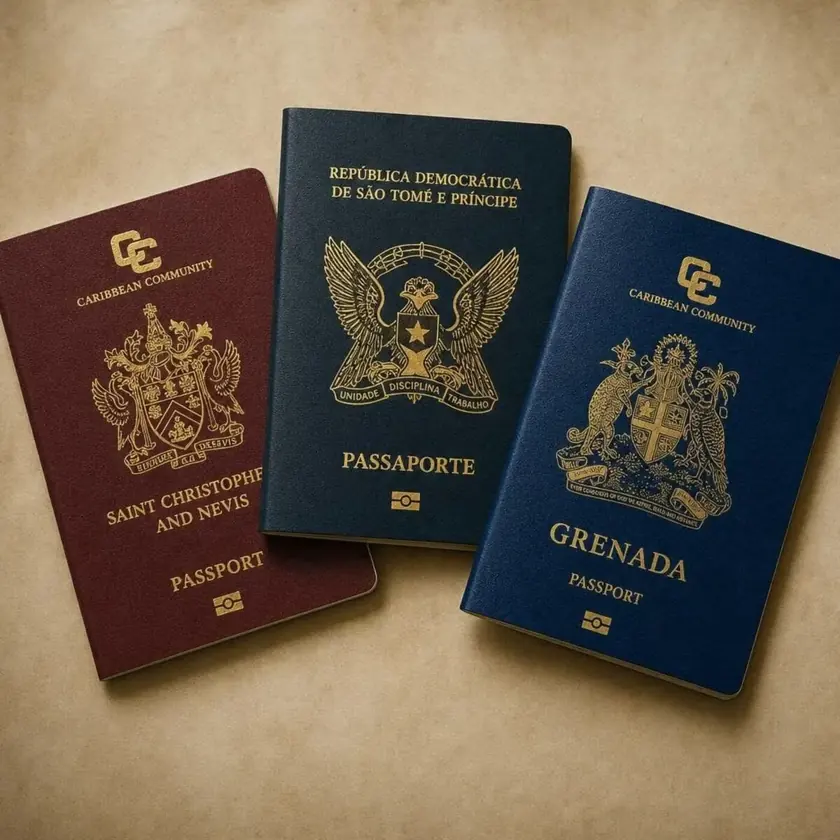
A cheaper tier of CBI programs has shown up recently outside the traditional Caribbean set. Countries like São Tomé and Príncipe, and Nauru, offer lower headline prices and faster processing, but they come with real trade-offs in passport strength, international reputation, whether banks will accept it, and long-term political stability. I would give them a proper look rather than blind enthusiasm or blind dismissal. My filter stays the same: durable mobility value against the all-in cost and risk.

Strategic Considerations That Determine Success or Failure

Getting the second passport is only the first step. The real work is fitting it into a coherent mobility setup afterwards.

Tax residency is not the same thing as citizenship, and this is where I see people get burned. Holding a second passport does not automatically change your tax obligations. Center-of-life tests and day-counting rules still apply. Mobility without matching tax planning can leave you exposed in two places at once instead of relieved, and that is an expensive mistake.

Sequencing matters. Ideally you secure a clean, solid second citizenship while you are still fully compliant at home, and only then shift your economic and physical life, gradually, if and when you decide to.

Usability beats a good ranking on paper. A passport that looks great on some index is worth less than it seems if correspondent banks scrutinise it heavily, if travel with it gets disrupted, or if you simply cannot use the rights it is supposed to grant.

Family and succession rules vary a lot between CBI programs, and long-term planning always has to account for spouses, children and future generations.

Realistic Limits

Citizenship by investment is a formal, transparent deal with a sovereign state. It is not anonymous in any way, and it is not a way out of legitimate legal obligations. Misrepresenting your personal data on the application is illegal and, on top of that, a bad strategic move; if it is discovered it can cost you the citizenship and cause lasting damage across several jurisdictions. I treat CBI as a permanent legal instrument, not a loophole.

Integration with the Larger Stack

A second citizenship multiplies the value of everything else you build. It gives you physical exit routes that protect both your financial and digital setups, adds an identity layer that supports privacy and operational security, and gives you backup platforms for banking and investing. It is, though, only as strong as the planning around it, tax residency design, banking relationships, family transmission, and keeping an eye on new regulations.

Global mobility is not something you buy once, it is a living part of your sovereign setup that needs to be stress-tested against the political and regulatory realities of this decade.

Key takeaway

A second citizenship works as insurance rather than a trophy, and its real value comes from the tax, banking and family planning you build around it.

Explore CBI programs

Module 06

4 min read

Operational Security (OpSec)

Operational Security, OpSec for short, means protecting your personal and sensitive information, along with your assets, by figuring out the real risks and then closing them down.

In crypto, three things matter above everything else:

Editorial illustration for Operational Security (OpSec)
  • Your Identity

    If you want to avoid someone, a criminal, say, watching your activity and tying it to your name, you have to stay alert and keep your real-life identity, name, address, phone number, and so on, separate from everything else.

  • Your Funds

    Always secure your financial data and, with crypto, your private keys. Not your keys, not your coins. That is not a slogan, it is literal.

  • Your Transactions

    Blockchains are pseudonymous, not private. To protect your financial privacy you have to actively cut down how traceable your on-chain activity is, using tools built for that.

None of this is paranoia and none of it is theatre. It is just applying a consistent set of rules so the things you built in the other modules, privacy habits, self-custody, mobility, financial infrastructure, your network, still hold up under real pressure.

When people on this path fail, it is almost never because they picked the wrong tool. It is because one piece of critical information leaked through a channel nobody was watching: a device, a conversation, a photo, a family member, or just a moment of convenience. OpSec is the quiet, ongoing work that closes those gaps before they turn into the reason everything falls apart.

The OPSEC Cycle

The standard OpSec procedure runs through five steps. They apply just as much to one person as to a family or a small team, and it is a cycle you repeat, not a box you tick once:

  • Identify the critical information that must be protected.
  • Analyze the realistic threats to that information.
  • Assess vulnerabilities, the gaps between what you want to keep private and what is currently observable.
  • Apply countermeasures that close the highest-value gaps first.
  • Review and adjust continuously, because both your life and the threat environment change.

Most people skip straight to buying gadgets, or pick up habits that look like OpSec but are really just for show. Perfect protection does not exist. What you can actually do, and what is enough, is cut down your worst exposures first.

Critical information usually falls into four buckets:

  • People

    Identities, relationships, schedules, vulnerabilities, and key-holder status.

  • Places

    Residences, frequent locations, travel patterns, and safe houses or secondary bases.

  • Capabilities

    Financial holdings, technical skills, access to systems, and contingency resources.

  • Intentions

    Planned moves, investment theses, political or philosophical commitments, and exit triggers.

Rank each item by how much damage its exposure would do, and the abstract list turns into a real to-do list.

Practical Layers

OpSec plays out across four overlapping areas, and a weakness in any one of them can undo the others.

Physical

  • Home, office and travel environments
  • Document storage, data destruction processes & data access
  • Not sharing routines & residential monitoring
  • Separation of sensitive materials from casual visitors

Digital

  • Compartmentalization of devices and accounts
  • Minimization of metadata
  • Assumption that any device leaving immediate physical control should be treated as compromised
  • Strict separation between high-risk and everyday environments

Social

  • Stop oversharing in private communications with casual acquaintances; strict need-to-know basis
  • Family members and close associates must have the right OpSec mindset, too
  • Children, partners and household staff often become the weakest link when they have not been included in the model

Financial

  • Avoid sharing transaction patterns, account linkages and visible large movements of funds
  • Use multi-jurisdictional infrastructure, reducing the resolution of the picture available to outsiders

Travel and Border Realities

Every move you make, crossing a border, staying somewhere temporary, communicating locally, needing to reach your funds or devices, adds exposure that simply does not exist when you sit still. I turn those moments from liabilities into something manageable by planning the device state in advance: clean profiles, biometrics off where compulsion is a real risk, data kept to a minimum.

Be especially careful with biometric unlock at borders. In many countries a passcode cannot be compelled the way a face or a fingerprint can. The goal is not to disappear, it is to avoid surprises that push you into rushed, risky decisions under time pressure or under someone else's authority.

Data-Broker Removal, Metadata, and Continuous Hygiene

Data brokers collect personal information and turn it into a lasting, easy-to-use profile, useful to advertisers and to people who mean you harm alike. Getting your records removed or suppressed, again and again, is basic hygiene, not some advanced move.

Photos and files usually carry hidden metadata, precise GPS coordinates, device identifiers, timestamps, software signatures, and you should strip that out before sharing them with anyone.

Human Factors and Sustainable Practice

Even the best technical setup loses to inconsistent human behaviour. Fatigue, social pressure, convenience, the urge to explain yourself, plain forgetfulness, those are the usual reasons people slip.

So good OpSec has to be something you can actually sustain: simple rules you can still follow under stress, a clear way to recover when something breaks, and a deliberate avoidance of both doing too little and doing far too much. Complexity you cannot keep up is worse than a simple habit you actually stick to.

The point is not to isolate yourself, it is to compartmentalise while still cooperating with people you trust. Cutting yourself off from a community creates its own problems: less mutual support, less information reaching you, and the psychological strain that leads straight to mistakes. Keep your relationships and your networks, just control what flows through them. Used with judgment, need-to-know protects both your security and the people around you.

Key takeaway

OpSec is the quiet work that keeps everything else standing, figure out what has to stay private, then close the biggest gaps first.

Module 07

5 min read

Financial Infrastructure & Offshore Strategies

A single domestic bank account is a single point of failure.

What I aim for instead is financial infrastructure built deliberately across several jurisdictions, redundant rails that hold, move and protect capital without depending on any one political or institutional system.

The word 'offshore' has a bad reputation these days, a lot of people hear secrecy or tax evasion. In reality it is just rational diversification of the systems that hold and move your money, the same logic you already apply to assets, citizenships or where your data sits.

What I am after is continuity and optionality under stress, not escaping reporting or oversight. History shows domestic financial systems run into capital controls, sudden freezes, currency restrictions, political targeting and institutional failure, and that happens faster than most people expect. Spread your custody and payment capacity across a few well-chosen jurisdictions and a single point of failure turns into a set of options.

Editorial illustration for Financial Infrastructure & Offshore Strategies

Why Multi-Jurisdictional Infrastructure Matters

If all your cash, cards and credit lines live in one country's banking system, that country can effectively freeze your mobility, your business and your ability to react the moment local rules change. That is a lot of power to hand to one place. Splitting things across jurisdictions changes the equation. It does not hide you from tax authorities, and it should not, but it does mean one broken bank, one nasty policy shift, or one frozen account will not derail your whole life.

The same logic that applies to citizenships and private keys applies here too. Concentration is fragile. Diversifying across legal and institutional lines is what makes you antifragile.

Core Building Blocks

A setup that works rests on a few layers that complement each other, each one chosen and maintained for resilience, not to look complicated.

Banking and e-money accounts

You want multi-currency accounts in stable, well-regulated jurisdictions outside your primary tax residence. They give you operating liquidity, currency diversification, and another way to send and receive fiat if your home country's system ever gets constrained.

Legal entities and structures

Offshore corporations, foundations and trusts, used correctly, separate your personal risk from your business risk, make cross-border activity easier, and support long-term asset protection, all within the limits of the law.

Brokerage and custody

Investment accounts and securities spread out, not concentrated under one country or one regulator.

Payment and liquidity rails

Cards, alternative payment networks, and crypto on- and off-ramps that keep your money movable even if one channel goes down. These rails need their own diversification too, otherwise you just recreate the same single point of failure one level down.

Jurisdiction Selection Criteria

Not every jurisdiction that used to be private or low-tax still makes sense today. I judge them on this:

  • Political and legal stability
  • Quality of the rule of law and independent judiciary
  • Depth and reliability of the local banking system
  • Tax-treaty network and clarity of reporting obligations
  • Substance and economic-presence requirements
  • Reputation with correspondent banks and international payment systems

How usable a jurisdiction actually is beats any theoretical advantage it might have on paper.

Economic Substance Rules

More and more international financial centers, BVI, Cayman Islands, Bahamas, Bermuda, Isle of Man and others, now run economic substance legislation. It requires entities doing relevant activities to have real employees, real expenditure and real premises, and to actually carry out the core income-generating activities (CIGA) locally. Pure holding companies get a lighter test, active businesses and financing structures do not.

Miss those requirements and you risk penalties, information exchange with tax authorities, and in bad cases getting struck off. So substance is a compliance obligation and a design constraint at the same time. If a structure cannot support real economic activity where it sits, I would not use it.

The Compliance Reality: CRS 2.0 and CARF

In the 21st century, financial infrastructure runs heavily on automatic information exchange. The OECD's Common Reporting Standard (CRS) has been updated, CRS 2.0, to widen the definition of financial assets, tighten due diligence, and clarify what has to be reported. The Crypto-Asset Reporting Framework (CARF) extends the same kind of reporting to crypto-asset service providers.

A legitimate offshore structure stays transparent to the tax authorities where the account holder is actually resident, while still being operationally diversified. Trying to hide reportable information, or building arrangements with no real substance, is illegal and fragile. It falls apart under scrutiny and destroys the very optionality it was supposed to protect.

The good news is that a small number of jurisdictions still sit outside full automatic information exchange, although more countries keep signing on to the standard.

Source-of-Wealth Documentation and Account-Opening Friction

Finding a jurisdiction is the easy part. Opening accounts, and keeping them open, is the hard part. Banks almost everywhere now want thorough source-of-wealth and source-of-funds documentation before they open anything, and incomplete or inconsistent paperwork is the usual reason for a rejection or a long delay.

Prepare a clear, well-supported story and the evidence behind it before you approach any bank. In my experience it makes a bigger difference to your success rate than the choice of bank itself.

Realistic Limits and Integration

An offshore setup needs a clear purpose, real substance, full compliance with local reporting, and realistic expectations about how much friction the banks will put you through.

Done right it multiplies everything else you build. Self-custodied crypto needs reliable off-ramps. Mobility works better when you already hold banking relationships in more than one place. Privacy and OpSec protect the devices and conversations you run all of it through.

A structure only the person who built it understands, and that cannot survive without them, fails the basic test of continuity. Simplicity you can maintain and hand over beats complexity that looks impressive on paper, every time.

So take the reporting framework as it is and design inside it for resilience, spreading exposure instead of concentrating it. Capital that stays reachable and protected no matter what any single government or institution does, that is the part that actually serves your freedom.

Key takeaway

Financial rails spread across several jurisdictions, built with real substance and full reporting compliance, turn a single point of failure into a set of options.

Module 08

3 min read

Financial Independence & Wealth Preservation

Financial independence is the fuel, sovereignty is the destination. Capital that cannot survive a change of government, a banking restriction or a currency crisis is not sovereign capital.

It is prosperity you are leasing.

Traditional financial-independence thinking aims for a number that covers your living costs, and it quietly assumes stable domestic conditions: continuous access to local banking, predictable currency purchasing power, and the option to simply stay in one jurisdiction forever.

What I aim for instead is a portfolio and cash-flow setup that keeps working when those assumptions break down, wherever I happen to be at the time.

Editorial illustration for Financial Independence & Wealth Preservation

Financial Independence Recalibrated

Classic financial independence math gives you a target portfolio based on expected withdrawal rates, inflation and how long you expect to live. Sovereignty asks for extra buffers and extra stress tests on top of that:

  • Higher cash and liquidity reserves to fund relocation, dual-structure overhead, legal costs, and periods of disrupted access.
  • Explicit allocation for mobility, compliance, and operational expenses that ordinary FI plans ignore.
  • Stress-testing against capital controls, wealth taxes, inflation spikes, sudden loss of access to domestic accounts, and sequence-of-returns risk amplified by the timing of a move.

That gives you a 'sovereignty-adjusted' independence number. It is higher than the standard figure, obviously, but far more solid. Hitting a normal domestic FI number while staying fully exposed to one jurisdiction is, in my view, only half the job.

The Four Pillars of Preservation

For wealth that actually lasts, you want deliberate diversification across four categories, and they play off each other:

Hard assets

Productive real estate in stable, rule-of-law jurisdictions, and physical precious metals held in secure, accessible custody. Spread these geographically too, never keep all your significant real assets in one country.

Productive assets

Businesses, equity stakes and cash-flowing enterprises whose value comes from real economic activity, not just from monetary conditions. I favour assets you can manage, or that generate value, across borders, since that cuts your dependence on any one person or one jurisdiction.

Monetary assets

A core holding of crypto-assets, portable, secured value, alongside diversified fiat reserves in strong currencies and short-duration instruments for near-term liquidity. Never put all your monetary value into one asset or one currency, central banks have shown over and over that any fiat currency can and will be inflated, restricted or restructured.

Human capital

Your skills, reputation and professional network need to stay valuable no matter where you are or who is in charge. In an age of remote work, being able to earn from multiple places is itself a form of wealth, and the most portable asset you have.

Risks Unique to the Sovereign Path

Mobility and optionality give you freedom, but they also bring their own preservation problems:

  • Currency and inflation risks across jurisdictions.
  • Policy risk, such as exit taxes, wealth taxes, forced repatriation rules, or sudden changes in the treatment of foreign assets.
  • Operational risk in managing assets across time zones, legal systems, and custody models.
  • Longevity of structures

    Entities, trusts, and bank accounts must be maintained with substance and compliance or they might become liabilities.

  • Key-person risk

    Portfolios and structures that depend on the ongoing expertise or presence of the original builder fail the continuity test.

So watch your position sizing, keep geographic and custodial redundancy, run regular stress tests, and decide in advance what has to stay accessible under which failure scenario.

Continuity, Generational Transfer, and the Expertise Trap

Your wealth should not die with you, and it should not become unreachable for the people who come after you just because they never got the full picture of the setup. Recovery procedures for crypto-assets matter more here than almost anything else.

So what you build has to be simple enough to survive you. Complexity only you understand is a hidden point of failure, and I keep coming back to that. Cut the key-person risk: design a portfolio, entities and processes that can run without you stepping in every week.

Key takeaway

Sovereign wealth keeps working even when one jurisdiction fails, spread across hard, productive, monetary and human assets, and simple enough to outlive you.

Module 09

3 min read

Sovereign Networks & Communities

Nobody becomes fully sovereign alone, and I have never met anyone who managed it.

Capital, mobility, privacy tools, OpSec and financial infrastructure give you individual optionality, but networks and communities are what turn that optionality into a real advantage, provided you choose and maintain them with the same care as every other layer.

You still need other capable, high-agency people around you. The difference is that these relationships are deliberate rather than accidental, filtered rather than just collected. Most people collect contacts. What you want is a network that genuinely increases your optionality across the areas from Module 01.

Editorial illustration for Sovereign Networks & Communities

Types of Useful Networks

Useful networks fall into categories that overlap. Each one gives you something the others cannot fully replace.

Geographic

There are physical hubs all over the world where internationally mobile professionals, founders, investors and operators already live and work. They give you local knowledge, point you to service providers, and help you fine-tune your own setup.

Digital

Encrypted forums, private messaging groups, selective online communities, all of them can hand you information that genuinely helps on this path. But they also demand strict information hygiene, or they turn into a way for you to get compromised, or just noise.

Professional

There are circles of operators, specialized service providers and capital allocators who understand multi-jurisdictional setups and who can actually execute under pressure. These are the people who turn a plan on paper into a finished structure, banking introductions, legal execution, custody solutions, deal flow that never shows up publicly.

Trust, Reciprocity, and Information Hygiene

To get into high-trust environments like these you have to give something back consistently, not just absorb information and offer nothing. Show competence under real conditions and keep your information hygiene tight. Reputation travels faster than any credential in these circles.

The rules are simple and I do not negotiate on them:

  • Lead with value rather than extraction; contribute on a regular basis.
  • Practice need-to-know even among friends. Not every useful contact needs the full map of your structures, holdings, or backup plans.
  • Verify claims from others by checking their track record.
  • Maintain clean exits. Burning bridges in small, high-signal communities is expensive and cannot be taken back easily.

Even in the most trusted circles, compartmentalisation still applies. The same discipline you use on your devices and identities works on people too. Oversharing in the name of authenticity, or simply wanting to belong, is one of the most common ways I have seen people wreck their own OpSec.

Practical Returns

Well-chosen networks, kept up with regular contributions, give you real, compounding leverage:

  • Faster and higher-quality intelligence on jurisdictions, service providers, regulatory shifts, and emerging risks.
  • Access to deal flow, co-investment, and specialized expertise that might never appear in public channels.
  • Mutual support during relocation, banking friction, personal emergencies, or operational stress.

In a world where official information is often delayed, incomplete or just wrong, your personal network becomes a form of infrastructure in its own right. How good the signal is depends entirely on how carefully you chose the people in it.

Evaluation Metrics and Coordination Models

So you do not waste years on the wrong rooms, check each network now and then with one test: does staying in it increase or decrease your real-world optionality across identity, capital, movement, data, decision-making and how clearly you think? Once that balance turns negative, step back. That is the correct response, even when it feels rude.

Worth tracking: the quality of introductions you actually get, how accurate the information turns out to be, whether it is reciprocal, and how much low-signal noise you have to wade through to find any of it.

Integration with the Larger Stack

Networks multiply the value of everything else, and everything else protects the network in turn. Privacy and OpSec decide how much you can safely share. Financial and mobility infrastructure decide how useful your connections can actually become. Clear thinking decides whether you stay the one curating your network, or end up curated by it.

In the end the quality of your network sets a ceiling on how far the rest of your setup can take you. Build it slowly, contribute first, demand nothing, keep measuring, and leave cleanly once the contribution turns negative. Over time the people you choose to stand with become part of your sovereignty itself.

Key takeaway

Curated, high-trust networks are infrastructure, so contribute first, compartmentalize always, and leave cleanly once the contribution turns negative.